If you’ve ever needed urgent money in Nigeria, you already understand why loan apps spread so fast. You download an app, fill a form, and you hope money lands quickly so you can solve the problem in front of you—transport to work, food at home, school fees, rent, stock for your shop, or that unexpected hospital bill nobody planned for. The trouble is that the same speed that makes digital lending convenient is also what scammers use to trap people. Many fake loan apps in Nigeria don’t come with obvious “scam” signs like a broken interface or poor English. Some have clean designs, strong branding, thousands of downloads, and even reviews that look positive at first glance. Yet they still operate in ways that can cost you money, expose your personal data, and put your name and reputation under pressure.
When people ask how to identify fake loan apps in Nigeria, what they’re usually trying to protect themselves from is bigger than “losing ₦2,000.” They want to avoid three painful outcomes that are common in this space: paying upfront fees and still not receiving a loan, giving away personal information that later gets misused, and entering a debt situation where the recovery process becomes abusive, humiliating, or contact-based. This is why it’s not enough to judge a loan app by its logo or by what a friend said. You need a simple way to test whether the lender is traceable, whether the terms are clear, and whether the app is built for lending or built for exploitation.
In this guide, I’ll break it down in plain language. You’ll learn the scam patterns, the strongest red flags to watch for, the safest verification steps using official resources, and what to do if you’ve already installed something suspicious. The aim is not to turn you into a lawyer or an investigator. The aim is to help you slow down for five minutes, so you don’t spend months paying for one rushed decision.
What Nigerians Mean by “Fake Loan Apps”
In everyday Nigerian conversation, the phrase “fake loan app” covers more than one thing, and that’s why people sometimes argue about it online. One person calls an app fake because they paid fees and got nothing. Another person calls an app fake because it gave them money but later embarrassed them by messaging contacts. Both people are describing real problems, but the “fake” is showing up in different ways.
In practical terms, Nigerians usually mean one of these three:
A scam app that never intends to give you a loan. It exists mainly to collect fees, harvest data, or trick you into repeated payments under different names like “activation,” “insurance,” “verification,” or “tax.”
A loan app that disburses money but operates outside basic consumer and privacy expectations. It may use harassment, contact-shaming, confusing penalty structures, or aggressive tactics that trap borrowers and make repayment feel like a punishment rather than a contract.
An impersonator app that copies the name, logo, or style of a known lender to mislead you into thinking you’re dealing with a reputable brand. This is common when scammers know people already trust a popular company name.
So the word “fake” is not always about whether the app can send money into your account. Sometimes it’s about whether the app is safe, traceable, and behaving like a legitimate lender. If an app’s model is built around fear, shame, and secrecy, you don’t need it to be “fake” in the strict sense before it becomes dangerous.
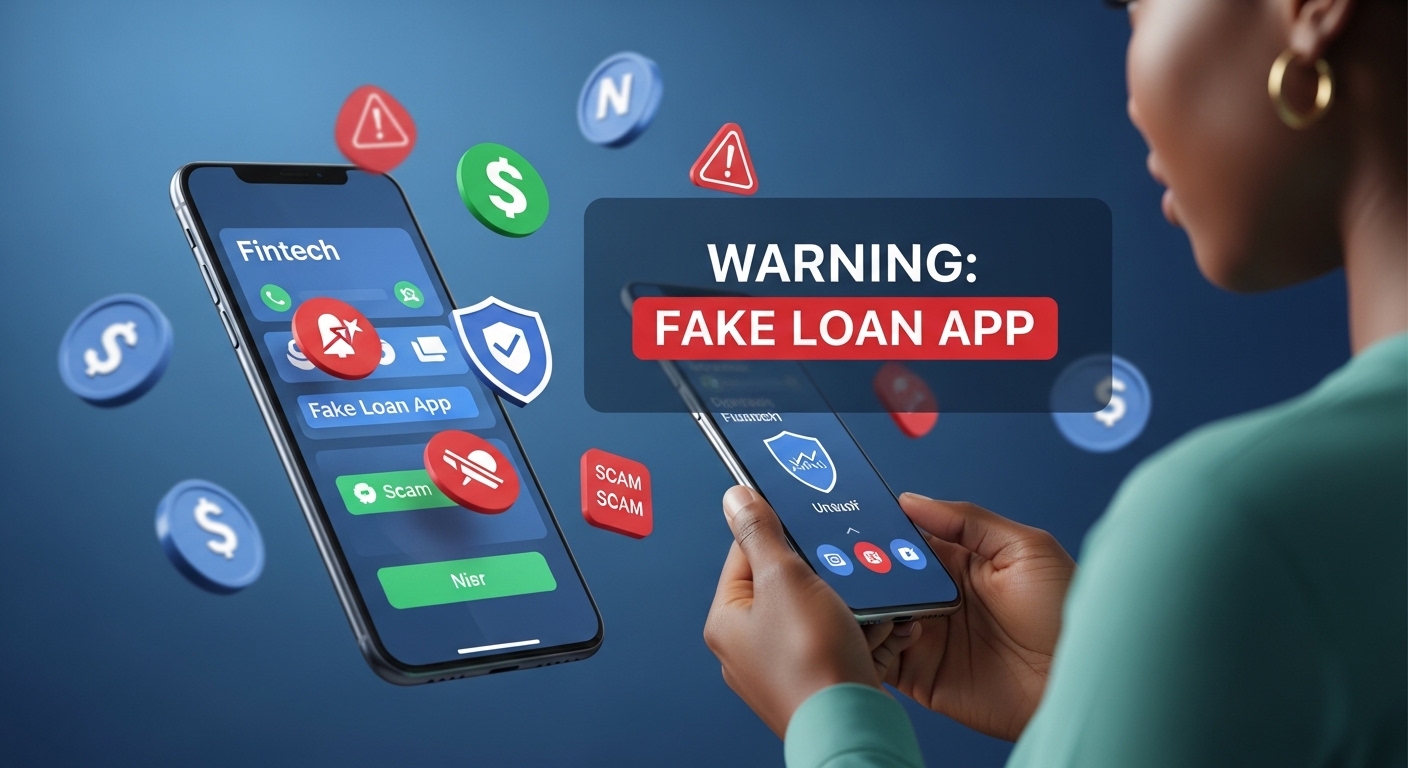
Why Fake Loan Apps Are a Big Problem in Nigeria
Fake loan apps thrive where people are under pressure and time is not on their side. When food prices rise, transport costs increase, rent is due, school demands show up, and salary delays happen, quick credit looks like a lifeline. That urgency is exactly what scammers rely on because urgency makes people skip verification. If you’re borrowing at 11:30 pm because something must be solved before morning, you’re more likely to accept any permission, pay any small fee, and ignore the warning signs you would normally notice.
Another reason this problem is common is data. Many Nigerians accept app permissions quickly because they want approval, and because permission screens are confusing when you’re in a hurry. A suspicious app may request access to contacts, SMS, files, location, and device information. Once you grant those permissions, it becomes harder to control what the app can do with your information. Even if you uninstall the app later, the data it already collected may have been stored and used.
There’s also a trust gap that scammers exploit. Not everyone has deep knowledge of licensing, regulators, or digital lending rules. Many people assume that if an app is on a popular app store, it must be legitimate. In reality, harmful apps sometimes appear, collect victims quickly, then disappear or return under a new name.
The good part is that Nigeria has been tightening oversight. The Federal Competition and Consumer Protection Commission (FCCPC) has published information about registration of digital money lenders and has issued regulations aimed at curbing abuses in digital consumer lending. This gives you a practical public tool: instead of guessing, you can cross-check. You don’t have to know everything about regulation to use a register as a reality check.
How Fake Loan Apps Typically Work
Most fake loan apps follow a predictable playbook. They rely on the fact that many Nigerians are trying to solve a problem quickly and will cooperate if they believe money is “almost ready.” The scam is usually built around two strategies: either they collect fees without disbursing, or they disburse small amounts and later use your data as leverage.
In the upfront-fee style, the app approves you quickly to create excitement, then introduces a “small” payment to activate your account or unlock disbursement. Once you pay, they don’t send the loan. Instead, they introduce another payment: insurance fee, verification fee, legal fee, or tax. It keeps moving because the scammer knows you’re emotionally invested. After paying once, many people pay again because they don’t want to accept they’ve been tricked.
In the harassment style, the app may disburse a small amount, then use aggressive tactics around repayment. Some of these apps are designed to trap borrowers in short tenors and penalty-heavy structures so default happens easily. Once you’re late, the app uses repeated calls, threats, or contact pressure to force repayment. The goal is not just repayment. The goal is fear-based control that pushes borrowers into repeated borrowing, refinancing, or penalty cycles.
Another pattern is impersonation. Scammers create apps or websites that look similar to legitimate lenders, then collect personal data or payment. A small difference in spelling, logo colour, or website address can be the only clue.
Once you understand these patterns, you stop making decisions based on advertising language like “instant approval” or “no collateral.” You start making decisions based on verification and behaviour. That shift alone reduces your risk sharply.
The Clear Warning Signs of a Fake Loan App
A red flag is not always a guarantee, but fake loan apps usually show more than one warning sign. The safest approach is to treat “multiple red flags” as a clear signal to walk away, even if the app looks popular. It’s better to lose a few minutes of searching than to lose your money, your privacy, and your peace.
1) They ask for upfront fees before disbursement
A common scam is the “activation” or “processing fee.” Legit lenders may charge fees, but the structure is usually disclosed clearly and tied to the loan agreement, and in many legitimate setups, fees are deducted from the loan or handled through transparent channels. If an app demands repeated payments before giving any money, especially via personal accounts or strange payment instructions, be careful. A real lender does not need to keep moving the goalpost before disbursing.
2) They demand excessive permissions that do not match the service
If a loan app insists on contacts and SMS access and refuses to proceed without it, that is a serious warning sign. The clearest risk is that your contacts can later become a pressure tool. Some lenders justify permissions for verification, but a reasonable lender should still be able to explain clearly why each permission is needed and should avoid collecting what is not necessary. When an app behaves like your contacts are the “collateral,” that’s not the kind of credit you want.
3) There is no traceable company identity
If you cannot find a clear company name, a real address, proper support email, and a consistent identity footprint, you are dealing with a risky operator. Scam apps often hide behind vague names and throwaway websites. A legitimate lender may be small, but it should still be traceable. If you can’t tell who you’re borrowing from, you can’t hold anyone accountable.
4) Their terms are confusing or impossible to read
When loan terms are hidden, constantly changing, or written in a way that makes it hard to understand penalties, that confusion is usually intentional. A loan agreement should make it easy to answer basic questions: how much am I receiving, what is the repayment date, what is the total repayment amount, what happens if I’m late, and how do I contact support? If those answers are not clear, you’re walking into a trap.
5) They threaten arrest, EFCC, or “BVN blocking” for normal debt
Threats are a classic manipulation tool. Ordinary debt default is generally a civil matter, not a criminal offence. If an app’s first strategy is fear—police threats, prison threats, EFCC name-dropping—treat it as high-risk. A lender can pursue repayment, but intimidation and false legal threats are not signs of a healthy lender.
6) The app keeps changing names or looks like it was cloned
Some suspicious apps get removed and return under a new name. If you notice frequent rebranding, multiple similar apps with the same interface, or an app that looks like a copy of another brand, pause. Cloned apps often rely on confusion. They want you to think you downloaded the real one.
7) Reviews mention contact harassment repeatedly
One or two angry reviews can happen anywhere. But a consistent pattern of “called my contacts,” “shamed me,” “threatened me,” or “sent messages to my boss” should not be ignored. Also pay attention to review style. Some fake apps use suspiciously repetitive five-star reviews that read like templates. Real reviews usually sound messy and specific.
8) They push you to borrow again instead of explaining repayment
If the app keeps pushing top-ups, rollovers, or refinancing without helping you understand total cost, that’s a warning sign. A lender that wants you stuck will focus on keeping you borrowing rather than helping you repay.
How to Confirm if a Loan App Is Legit in Nigeria
This is the part that saves you the most stress. Instead of relying on random social media lists or “top 10 loan apps” articles that may be outdated or biased, you can use official resources and a few consistent checks.
Step 1: Check the FCCPC register / registration status
FCCPC publishes registration information and lists of digital money lenders (conditionally approved or fully approved under its framework). Start here:
- FCCPC digital money lenders registration page: https://fccpc.gov.ng/registration-of-digital-money-lenders/
If a lender is not on the list, it does not automatically prove it is fake, because registration status can change and some businesses may be in process. But it is a strong signal to proceed carefully, especially if the lender is also showing other red flags like excessive permissions and unclear identity. A lender that is traceable and compliant will usually be comfortable being checked.
Step 2: Confirm the company identity outside the app
Before you borrow, search the company name and confirm that the identity is consistent in multiple places: official website, corporate name, customer support contacts, and clear descriptions of the product. Fake operators usually have shallow footprints. You find one page today and it disappears tomorrow.
Step 3: Check the lender’s support behaviour before you borrow
A simple test is to send a message to support before you borrow. Ask one direct question like “what is the total repayment on ₦50,000 for 30 days including all fees?” If support responds with confusion, insults, or pressure language, you’ve learned what you needed to know without risking your money.
Step 4: Check privacy and data processing behaviour
If an app is aggressive about contacts and messaging permissions, treat it as a risk even if it appears popular. Nigeria’s data protection framework has become stronger over time, and misuse of personal data is increasingly treated as a compliance issue. If you want the official contact point for data protection complaints and guidance, NDPC maintains an official contact page:
- NDPC contact page: https://ndpc.gov.ng/contact/
This is not about becoming a legal expert. It is about understanding that your contacts and messages are not “normal” requirements for borrowing.
Step 5: Verify the channel you used to download
Even legitimate brands can be impersonated. Confirm that the app publisher name matches what the company uses officially, and avoid clicking random links from ads or forwarded messages. A lot of scams begin with “download here” links that lead to look-alike pages.
What to Check Before You Borrow From Any Loan App
This is a practical pre-borrow checklist you can run in five minutes. The goal is to answer key questions before money enters your account and you become emotionally tied to the decision.
Start with cost. Confirm you understand the total cost of borrowing, not just “interest.” Ask yourself: if I receive ₦X today, how much exactly will I repay on the due date, and what extra charges apply if I’m late by 3 days or 7 days?
Next, confirm the repayment date and whether the app allows extensions, restructuring, or early repayment. Some borrowers get trapped because the tenor is shorter than their income cycle. A seven-day loan for a person who earns monthly is a setup for stress.
Then check whether the app uses debit attempts or mandates, and what happens if your account is empty. Some apps retry debits repeatedly, which can create bank charges or disrupt your finances if you’re not prepared.
Also check the support channel. A legitimate lender should have a working email or in-app support system that does not feel like a random WhatsApp line with no accountability. Support behaviour tells you what recovery behaviour will look like later.
Finally, check permissions. If a loan app requires your contacts and SMS to “approve” you, ask yourself a simple question: would a bank need this to lend to you? If the answer is no, treat the app as risky. A loan should be based on repayment ability, not on how many people you know.
Common Mistakes Nigerians Make That Lead to Loan App Scams
Most people don’t fall for fake loan apps because they are careless. They fall for them because they are rushing, stressed, or trying to fix something urgent without help.
One common mistake is borrowing late at night under pressure and skipping verification. When you are tired and anxious, your brain wants the fastest solution, not the safest solution.
Another mistake is paying any upfront fee because the amount looks small. Scammers prefer small payments because people are less likely to report and more likely to “just try again.” It’s also why they stack fees: each fee looks manageable, but the total becomes painful.
Many people also grant every permission without thinking, especially contact access. They treat permissions like a formality. In this market, permissions are not a formality. They are power.
Another mistake is stacking loans—taking one loan to pay another. This makes you desperate, and desperation makes you easier to manipulate. It also reduces your ability to negotiate because you have multiple deadlines at once.
Finally, people ignore the basic question of identity. They don’t confirm who owns the app, where the company is based, or how to reach support if something goes wrong. When trouble starts, they discover there is nobody to talk to.
What to Do If You’ve Already Installed a Suspicious Loan App
If you installed a loan app and now you are worried, the goal is to reduce risk quickly without creating panic.
Start by removing unnecessary permissions immediately. Go to your phone settings and disable contacts, SMS, and storage permissions. If the app breaks, that itself is useful information. A legitimate lender should not need your contacts to behave responsibly. If an app cannot function without contacts, you now understand the business model it was built on.
Next, screenshot important information before you uninstall—loan details, terms, repayment schedule, and any threatening messages. If you later need to complain, evidence is everything. Don’t rely on memory, because when stress rises, details get lost.
Then uninstall the app. If you installed it from a link outside the store, also check your phone for any other unknown apps that came with it.
If you shared sensitive information (BVN, ID, bank details), monitor your accounts closely. Use your bank’s official channels to raise concerns if you notice unusual activity. If the app collected your card details, consider talking to your bank about card security options.
What to Do If a Fake Loan App Has Access to Your Contacts
If contact harassment has started, handle it calmly. The goal is to reduce shame damage while you protect evidence and plan your next steps.
First, inform a few key contacts briefly. A simple line like “I’m handling a repayment issue; please ignore unknown messages about me” reduces the power of shame tactics. You don’t need to explain your whole life. You just need to remove the shock value.
Second, document evidence. Ask one or two trusted people to screenshot messages they receive and note the numbers used. Also keep your own screenshots and call logs.
Third, report through official channels. For consumer complaints and digital lending misconduct, start with FCCPC’s official website:
- FCCPC main site: https://fccpc.gov.ng/
For personal data misuse, Nigeria’s data protection authority is the Nigeria Data Protection Commission (NDPC). Official contact points are here:
- NDPC contact page: https://ndpc.gov.ng/contact/
When you report, include the app name, company name (if any), screenshots, call logs, payment evidence, and a clear timeline. Reports work best when they are organised.
Cost Breakdown: The Hidden Costs of Fake Loan Apps
The obvious cost is money you lose to upfront fees. But the hidden costs can be worse and longer-lasting.
There is the privacy cost: your contacts, messages, and personal details can be misused or sold. Even if nothing happens immediately, the exposure can create problems later.
There is the emotional cost: fear and shame are heavy, especially when family, colleagues, or your community is involved. People under harassment often lose sleep and make poor financial decisions just to stop the noise.
There is the financial spiral cost: once you borrow again to stop harassment, you may end up with multiple due dates, higher penalties, and the kind of debt pressure that affects your monthly stability.
These costs are why verification before borrowing is not “extra work.” It is protection.
Processing Timeline: How Fast Scams Escalate
Fake loan apps move fast because speed is part of the trap. Many scams escalate within 24 to 72 hours.
If it’s an upfront-fee scam, the pressure is immediate: “pay now to unlock disbursement.” The scammer wants to collect quickly before you have time to think or ask someone for advice.
If it’s a harassment-style app, the escalation often starts immediately after the first missed payment. Some apps behave politely until the due date passes, then the tone changes sharply.
That speed is why your best defence is acting early: verify before borrowing, and if you’re already involved, document and reduce permissions quickly.
Advantages and Disadvantages of Using Loan Apps Generally
Loan apps can be useful when used responsibly. They can provide quick access to funds, reduce paperwork, and help you bridge short-term gaps. For some people, that speed is the difference between keeping work moving and being stuck.
But the disadvantages are real: high costs for short tenors, penalty-heavy structures, and the risk of dealing with operators that misuse data or behave aggressively. Many borrowers also underestimate how stressful short repayment windows can be, especially when income is irregular.
So the goal is not “never use loan apps.” The goal is “use safer, traceable options, borrow only what you can repay without panic, and never accept a loan that requires you to gamble with your privacy.”
Better Alternatives to Risky Loan Apps
If you need credit and you want less risk, consider alternatives that are easier to verify and manage.
Cooperative societies can be cheaper and more flexible for many Nigerians because the system is relationship-based and repayment expectations are clearer.
Employer-backed salary advances can be safer because repayment is structured and often comes with fewer hidden penalties.
Microfinance banks and licensed finance companies may offer clearer terms and better documentation. The process can be slower than a loan app, but the stability can be worth it.
And sometimes the best alternative is not borrowing at all—negotiating installment payments, delaying an expense, or adjusting a budget for one month. It may not feel exciting, but it often saves you from paying a high price for short-term relief.
Final Practical Checklist
Use this checklist whenever you see a “fast loan” ad. If you follow it consistently, you will avoid most fake loan app traps.
- Confirm the lender’s identity and support channels outside the app
- Check FCCPC registration information where applicable
- Avoid apps that demand contacts/SMS permissions as a condition for approval
- Never pay repeated upfront fees before disbursement
- Read repayment date, total repayment amount, fees, and penalties in plain terms
- Borrow only what your income can repay without borrowing again
- If harassment starts, document, reduce permissions, inform key contacts briefly, and report using official channels
Conclusion
Fake loan apps in Nigeria succeed when people borrow in a rush and skip verification. Once you slow down and start checking identity, permissions, terms, and registration footprint, you reduce your risk sharply. The biggest protection you can give yourself is not “luck.” It is taking five minutes to confirm who you are dealing with and refusing to borrow from any app that treats your contacts as collateral.
Finally, if you already installed a suspicious app, don’t panic. Remove permissions, keep evidence, uninstall, protect your accounts, and report misconduct through official channels. When you handle it early and calmly, you take away the scammer’s biggest advantage: your urgency.
FAQs (10–15)
1) How do I know if a loan app is fake in Nigeria?
Look for multiple red flags together: upfront fees before disbursement, excessive permissions (especially contacts and SMS), unclear company identity, confusing terms, threats, and repeated reviews about contact harassment.
2) Is FCCPC the right place to check digital money lenders?
FCCPC publishes registration information and related lists for digital money lenders under its framework, which helps you avoid completely untraceable operators.
3) Are all loan apps that ask for contacts fake?
Not always, but it is a serious risk signal in Nigeria’s digital lending space because contact access has been abused for shaming and pressure.
4) Can fake loan apps block my BVN?
Some apps use this as a threat. If you see threats like this, treat the lender as high-risk, reduce permissions, keep evidence, and use official complaint channels.
5) What should I do if I paid an activation fee and still got nothing?
Stop paying further fees, collect evidence of payments and conversations, and report through official consumer complaint channels. Paying more rarely fixes an upfront-fee scam.
6) Can fake loan apps shame me by messaging my contacts?
Some have done this by exploiting contact permissions. If it happens, document evidence, inform key contacts briefly, reduce permissions, and report.
7) Should I uninstall a suspicious loan app immediately?
First secure evidence (screenshots of threats, loan details, repayment screens), then remove permissions, then uninstall. Evidence matters if you need to report.
8) Where do I report data misuse by a loan app?
For personal data misuse, NDPC is relevant. Use their official contact page and submit evidence such as screenshots and call logs.
9) Can I be arrested for owing a loan app?
Ordinary debt default is generally a civil matter. Threats of arrest are often used to pressure borrowers.
10) Why do fake loan apps want my SMS permission?
In some cases it can be used to monitor messages or support pressure tactics. Whether or not the app claims a reason, excessive permissions increase risk.
11) Are Play Store apps always safe?
Not always. Harmful apps can appear, collect victims quickly, then get removed or return under a new name. Verification should not stop at “it’s on the store.”
12) What is the safest way to borrow quickly in Nigeria?
Use traceable, regulated options where possible, borrow small amounts you can repay, avoid excessive-permission apps, and refuse any lender that relies on fear-based recovery.
13) How do I avoid cloned or impersonator loan apps?
Download only from official channels, confirm the publisher name, and cross-check the brand’s official website before entering personal details.
14) If a loan app already has my BVN, what should I do?
Stay calm, remove permissions, uninstall the app, monitor your accounts, and contact your bank through official channels if you notice unusual activity.

Hi, I’m Israel Koburu, a digital and content creator passionate about turning complex ideas into simple, useful content that helps people make better decisions online.
I started creating content because I noticed how much confusing and misleading information is out there, especially around finance, travel, and digital skills. My goal is to cut through the noise and give you practical guides you can actually use—whether it’s understanding loans without falling into debt traps, planning a trip on a budget, or learning how to grow online without relying on guesswork.
On my blog, I focus on clear, research-backed writing that breaks down real-world topics into step-by-step guides. I believe that good content should respect your time: no fluff, no jargon, just straight answers and actionable tips. I test the advice I share, pull from reliable sources, and update posts regularly so you’re not stuck with outdated info.

